
 Home
Home About Us
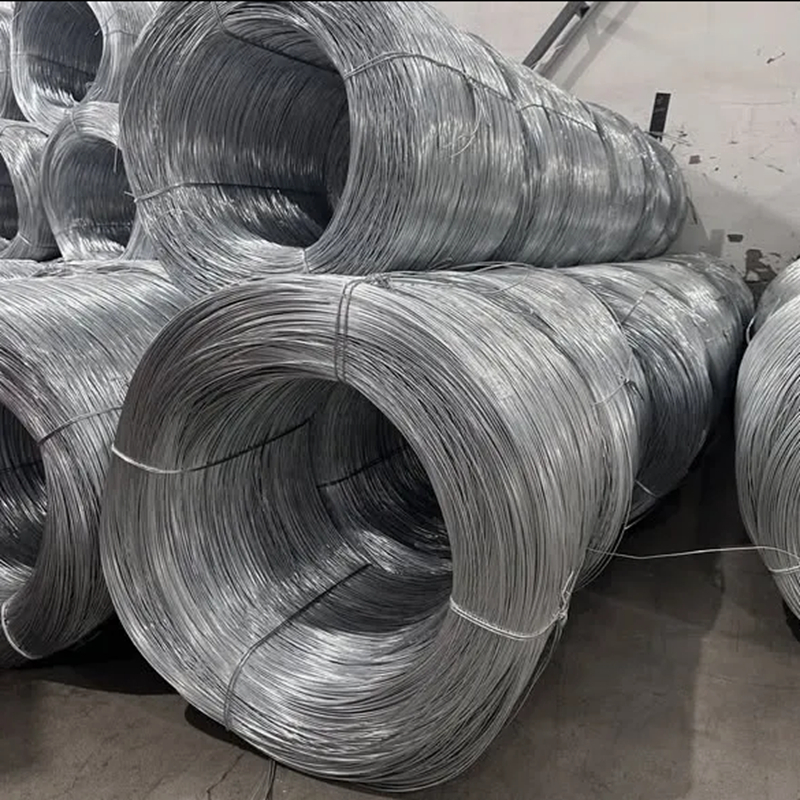
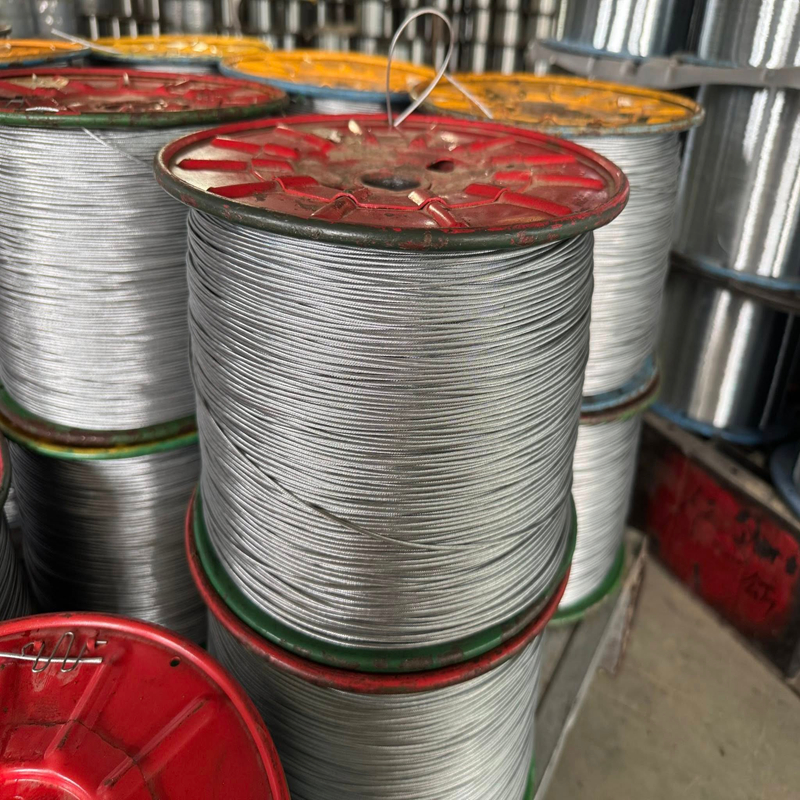
Galvanized Steel Wire
Product Overview
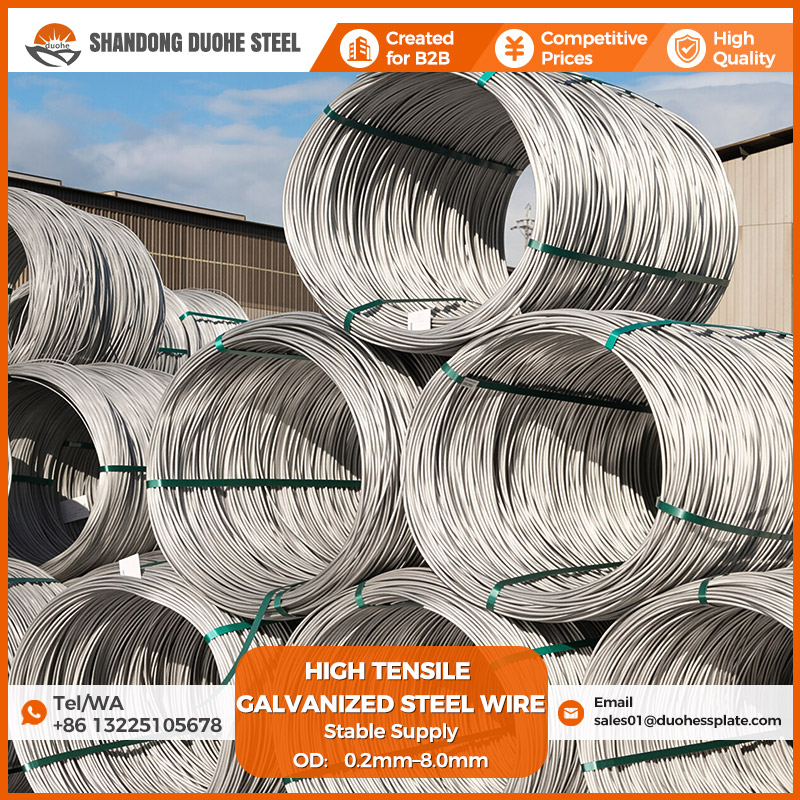
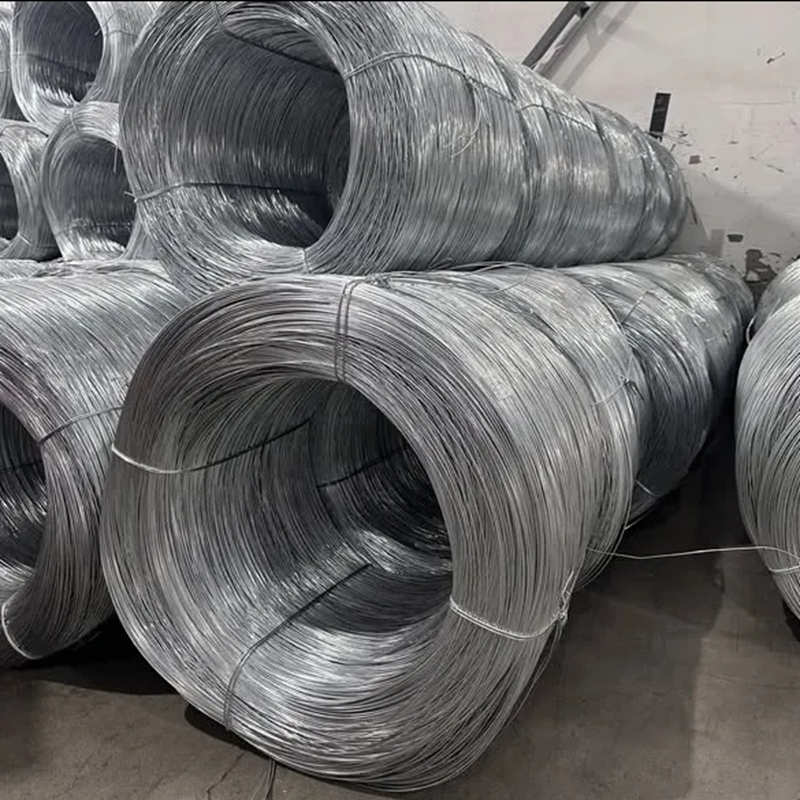
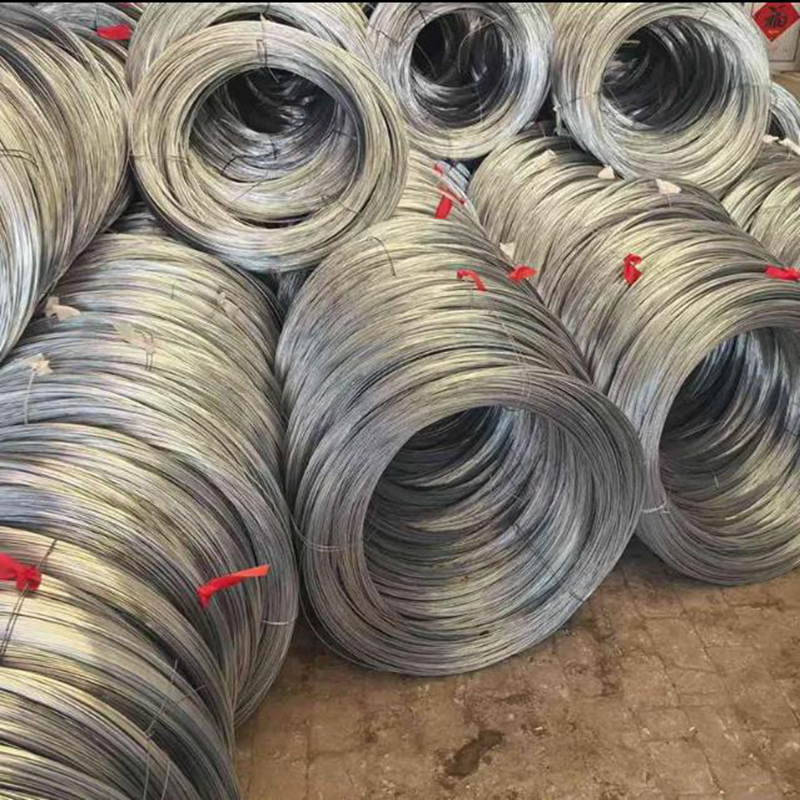
Our Galvanized Steel Wire is a high-quality carbon steel wire protected by a layer of zinc through either hot-dip galvanizing or electro-galvanizing processes. This zinc coating creates a metallurgical bond with the steel substrate, providing exceptional corrosion resistance while maintaining the mechanical strength and flexibility of the base material .
Available in a wide range of diameters (0.15mm to 10.0mm), tensile strengths, and zinc coating weights, our galvanized wire is designed to meet the demanding requirements of construction, agriculture, infrastructure, and general manufacturing industries. Whether you need soft annealed wire for tying applications or high-tensile wire for structural reinforcement, we offer tailored solutions that deliver long-term performance in even the harshest environments.
Quick Specification Table (Typical Options)
| Item | Typical Range / Options | Buyer Notes |
| Wire type / process | Drawn bright wire then galvanized / Galvanized then drawn / Hot‑dip galvanized after drawing (HDG) | HDG gives thicker coating; drawn‑then‑galvanized gives smoother finish for wire forming |
| Diameter (nominal) | 0.10 mm – 12.0 mm (common ranges: 0.5–6.0 mm) | Specify nominal diameter and tolerance (e.g., ±0.01 mm for thin wire) |
| Tolerance on diameter | ±0.01 mm – ±0.3 mm depending on diameter and standard | Tight tolerances needed for springs, wire mesh and machine feed |
| Tensile strength / grade | Low carbon (150–350 MPa) / Medium (350–600 MPa) / High tensile (600–2000 MPa for special spring wire) | Select grade by application; supply MTR for tensile/elongation |
| Finish / surface | Bright galvanized (smooth, low spangle) / Spangled (HDG) / Zinc‑coated matt | Choose finish for aesthetics, paintability or friction needs |
| Coating method | Electrogalvanized (EG) / Hot‑dip galvanized (HDG) / Mechanical galvanizing | EG: thin, uniform (good for machine use); HDG: thick, rugged (outdoor exposure) |
| Coating mass / thickness | EG: 5–40 g/m²; HDG: Z60–Z600 g/m² (or μm equivalent) | Specify coating in g/m² or μm and whether value is total or per side (for strip-based wires) |
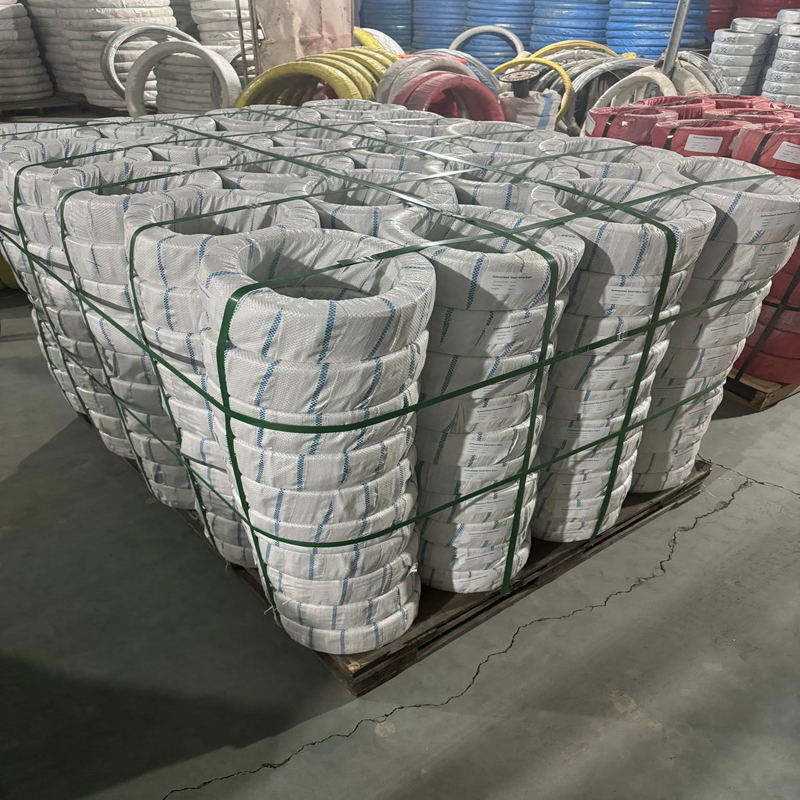
| Spooling / packaging | Coils, spools, drums, bundles, palletized boxes | Indicate preferred coil weight, inner cores (plastic/steel) and labeling |
| Straight lengths & cut pieces | Available on request for specific OD ranges | Useful for ties, staples, clips or assembly lines |
| Material standard | ASTM A641 (EG) / ASTM A153 (HDG hardware) / EN 10244 / GB/T 455 / JIS | State applicable standard in PO |
| Tolerances & tests | Dimensional, tensile, elongation, coating mass, adhesion, surface visual | Specify required inspections and acceptance criteria |
| Packing | Inner paper/VCI, plastic film, wooden box or steel drum, desiccant for long voyages | Export packing for sea freight available; customize for weather/handling risks |
| Certificates & inspection | MTR, coating mass report, third‑party inspection (SGS/BV/Intertek) | State requirement at RFQ stage |
| Lead time & MOQ | Stock: 7–14 days; custom: 14–35+ days. MOQ often 1–3 MT per spec | Smaller sample coils often available for testing |
Key Buyer Benefits & Considerations
Corrosion Protection & Service Life: HDG wires typically give longest life outdoors. Electrogalvanized wires provide thinner coatings but smoother surfaces for machine use. Specify coating mass relative to expected exposure.
Dimensional & Mechanical Control: Drawn wires with controlled diameter and tensile properties are required for automated forming and spring manufacture—request MTR and sample coils.
Compatibility with Downstream Processes: Consider spool format, coil weight, and wire lubrication/oiling for your machines. Also indicate whether annealed/soft or bright hard finish is required.
Cost vs Performance: EG is generally cheaper and better for machine processing; HDG costs more but offers superior protection in corrosive environments. Mechanical galvanizing can be a mid‑point.
Paintability & Secondary Coatings: For painted products, ensure surface prep and compatibility; some buyers request passivation before painting. PVC/PVDF coating is available for wire mesh and fences—specify color, thickness and adhesion tests.
Safety & Handling: Zinc fumes occur during hot forming and welding—specify appropriate warnings and MSDS with shipments for buyer safety compliance.
Standard Wire Gauges (BWG) and Diameters
| BWG Gauge | Diameter (mm) | Common Application |
| 20 GA | 0.89 | Light binding, crafts |
| 18 GA | 1.24 | General tying, mesh |
| 16 GA | 1.65 | Fencing, trellis wire |
| 14 GA | 2.11 | General construction, binding |
| 12 GA | 2.77 | Heavy fencing, reinforcement |
| 10 GA | 3.4 | Structural, cable |
| 8 GA | 4.19 | Heavy industrial, rope |
Fencing & barbed wire: agricultural, security and boundary fences (galvanized or further PVC coated).
Binding & packaging: bale tying, construction binding, horticultural ties and palletizing.
Wire mesh & gabions: welded mesh, woven mesh and gabion cages for civil engineering.
Springs & wire forms: with high‑tensile zinc‑coated wire for springs, clips and fasteners (select proper tensile grade).
Fasteners & hardware: nails, staples, screws and wire products requiring corrosion protection.
Construction & scaffolding ties: temporary ties, clamps and fixings with good bending and corrosion resistance.
Electrical earthing/stitching in some non‑critical uses (consult standards).
Decorative & furniture elements: where bright, smooth finish is desired (choose EG or mechanical galvanizing for smoothness).
FAQ — Frequently Asked Questions (for International Buyers)
Q: What is the difference between electrogalvanized (EG) and hot‑dip galvanized (HDG) wire?
A: EG wire uses an electroplating process to apply a thin, uniform zinc layer—good for smooth surface finish and machine processing but with thinner corrosion protection. HDG wire is dipped in molten zinc, producing a thicker, rugged coating and often visible spangle; HDG gives longer outdoor life, especially in aggressive environments.
Q: How should I specify coating thickness or coating mass?
A: Request coating mass in g/m² or thickness in micrometers (μm). For EG typical ranges are 5–40 g/m²; for HDG common specifications range from Z60 to Z600 g/m² depending on environment. Confirm whether the value is single‑side, per wire circumference, or total mass—state method and tolerance in the contract.
Q: What tolerances on diameter and tensile strength should I expect?
A: Tolerances depend on diameter and standard. Thin wires used for mesh/springs often require ±0.01–0.03 mm tolerance; heavier wires may accept ±0.05–0.3 mm. Tensile strength and elongation depend on grade—request MTRs and sample testing for critical parts.
Q: Can galvanized wire be used for spring manufacture?
A: Yes—high‑tensile galvanized wire or zinc‑coated spring wire is available, but you must specify required tensile strength, elongation and whether coating will be applied before or after drawing. For critical springs, provide samples and require mechanical test results.
Q: How is galvanized wire packaged for export?
A: Options include small coils on cardboard/plastic cores, large coils on steel/wood cores, drums, or palletized bundles. Inner VCI/kraft paper, outer plastic film and wooden crates/drums are common; desiccants and VCI for long sea voyages are recommended.
Q: Do you provide MTRs and third‑party inspections?
A: Yes. Mill Test Reports, coating mass reports and third‑party inspections (SGS, Bureau Veritas, Intertek) are available and should be specified at RFQ stage.
Q: How should I store galvanized wire to avoid damage?
A: Store in a dry, ventilated place off the ground. Avoid direct contact with moisture, salts, acids or incompatible metals. Keep coils upright or on racks to prevent deformation; use protective covers and desiccants for long storage.
Q: Can galvanized wire be painted or PVC coated?
A: Yes. Wire can be PVC coated, polymer coated or painted; coating parameters (thickness, adhesion, color) must be specified and will add lead time and cost. Ensure surface prep and passivation if required for paint adhesion.
Contact our sales team today for a quotation or to discuss your project requirements. We are committed to providing high-quality galvanized steel wires that meet your exact specifications and delivery deadlines.
Your trusted partner in galvanized steel solutions.For further technical information, pricing, or customization, please contact our sales team:
Tel/WA/Wechat: +86 13225105678
Email: sales01@duohessplate.com
Previous:no more
Next:no more